
Last month (January 2026), I attended a briefing in Leinster House focused on access to Continuous Glucose Monitoring (CGM) for people living with diabetes in Ireland. In my 33 years of living with diabetes, I have never seen such a universal agreement on a diabetes issue.
Clinicians, nurses, people with diabetes, patient organisations, industry, and the HSE National Clinical Programme for Diabetes were aligned on one key point: CGMs are clinically effective, life-changing, and cost-saving. And yet, tens of thousands of people who could benefit from them remain excluded.
This briefing, hosted by Dexcom and sponsored by Deputy Colm Burke TD and Senator Anne Rabbitte, highlighted not just the benefits of CGM: but the real and unnecessary barriers that still exist in Ireland today.
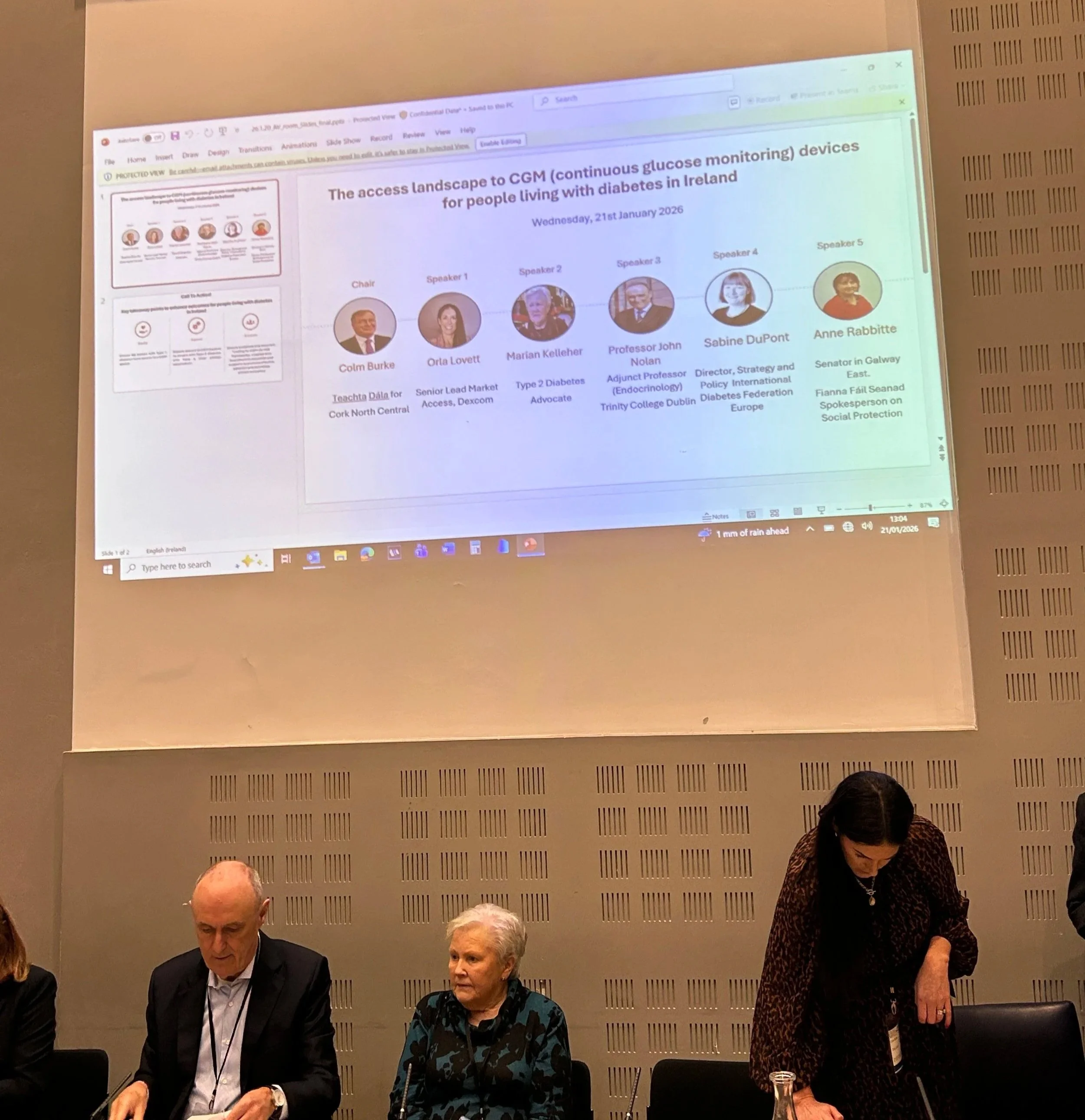
L-R: Prof John Nolan, Marion and Orla Lovett
Who Is Being Left Behind?
Since December 2023, a subset of adults living with Type 1 diabetes has been excluded from CGM reimbursement due to an eligibility rule from the HSE Medicines Management Programme (MMP): applicants must have required insulin “from the outset”.
This rule is not evidence-based. It excludes people who were initially misdiagnosed or who progressed to insulin dependence later, despite having identical clinical needs to those who qualify.
In 2024, 537 applications were rejected for this reason alone. Approving CGM access for this group would cost an estimated €1.5 million annually, which in my view is a modest figure in the context of national healthcare spending. More importantly, HIQA did not recommend this “from the outset” requirement.
Beyond people with Type 1 Diabetes, many others are excluded entirely, including people with:
Type 2 diabetes (including insulin-dependent)
LADA (Latent Autoimmune Diabetes in Adults)
Cystic-fibrosis related diabetes
Pregnant women with diabetes
Lived Experience: “My Diabetes Was Out of Control Without Me Knowing It”
One of the most powerful contributions came from Marian, who has lived with Type 2 diabetes for over 40 years.
Marian shared how, for years, finger-prick testing failed to show the full picture of her glucose levels. On more than one occasion, she was hospitalised only to discover her blood glucose was dangerously high. It was 30 mmol/L without any warning symptoms.
Since starting CGM, she has been able to manage her diabetes far more safely. But access comes at a cost: €44 every 10 days, paid out of pocket by two retired people relying on a pension.
Her story made one thing clear: CGMs don’t just improve numbers—they prevent harm.
The Clinical Case Is Already Proven
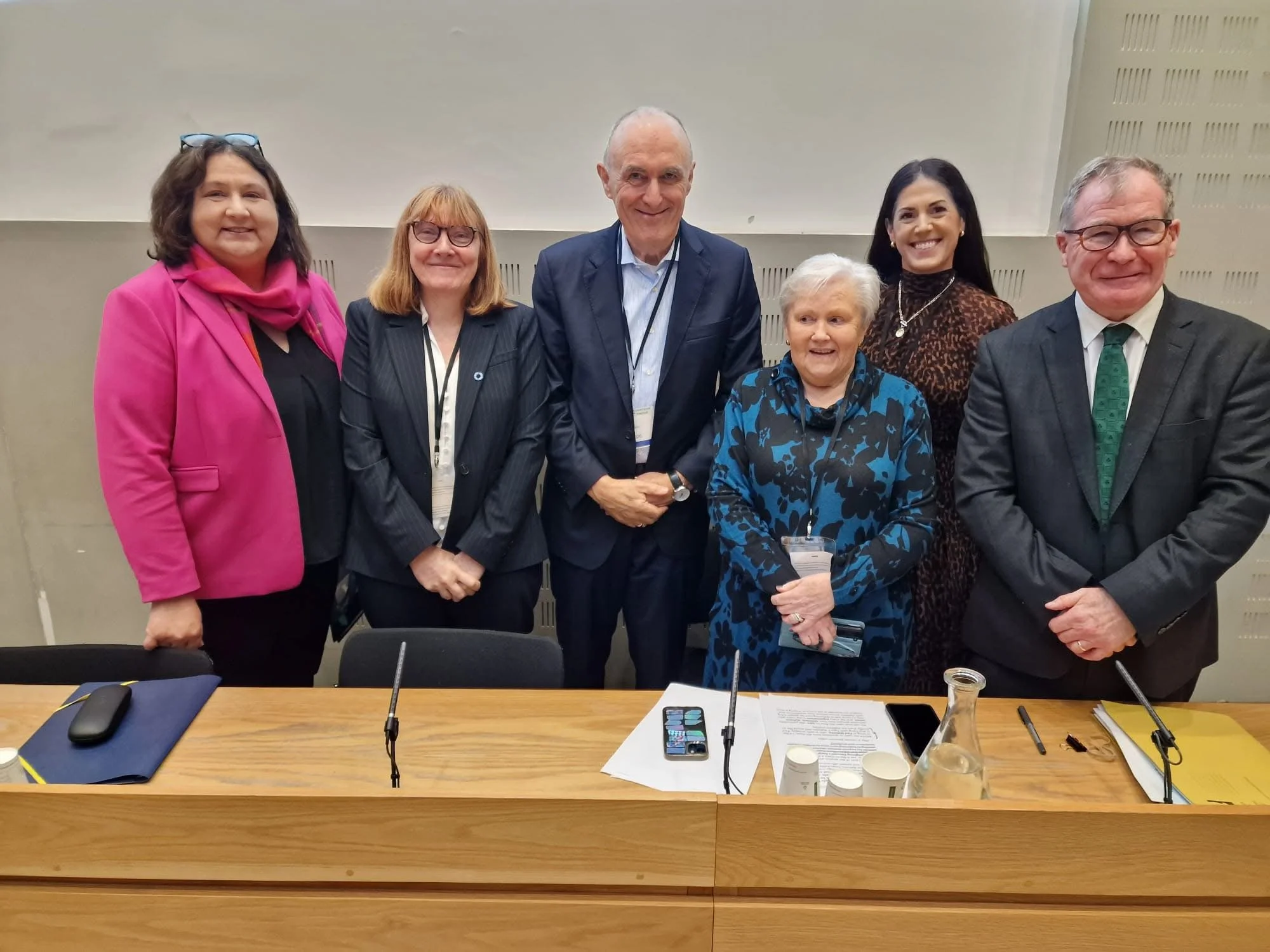
Professor John Nolan outlined the extensive evidence supporting CGM use across all types of diabetes, particularly Type 2. People who develop diabetes-related complications are five to ten times more complex—and more expensive—to manage.
Ireland, he noted, is lagging behind other countries.
Sabine DuPont, Director Policy and Strategy with the International Diabetes Federation Europe reinforced this point, describing CGM as technology that “turns the invisible into visible”. Across Europe, countries such as France, Germany, the Netherlands and Switzerland already reimburse CGMs for people with Type 2 diabetes.
The Cost of Delay
During the open discussion, clinicians highlighted the broader system impact:
1 in 5 people in hospital in Ireland has diabetes, most of whom have Type 2
Average hospital stays:
5 days for a person without diabetes
11 days for a person with diabetes
Professor Ciara Coveney, speaking from maternity care, shared that pregnant women with Type 2 diabetes experience the poorest outcomes of all diabetes types in pregnancy—affecting both mothers and babies.
Despite all this, the HSE is now seeking a Health Technology Assessment (HTA) on CGMs for Type 2 diabetes. Several clinicians questioned the value of this, arguing that an HTA would simply confirm what existing evidence already shows—at the cost of further delay.
A Practical Way Forward
No one at the briefing suggested opening the floodgates overnight. What was proposed was a phased, cost-sensitive expansion:
Start with the most vulnerable groups
Use reduced hospital admissions and complications to fund subsequent phases
Deliver CGM access in line with Sláintecare’s focus on prevention and community-based care
This kind of approach could be led collaboratively by Diabetes Ireland, the National Clinical Programme for Diabetes, and the HSE.
What Can You Do?
If you are living with diabetes—or care about someone who is—your voice matters.
Contact your local TDs and Senators and ask them to support immediate funding for the €1.5 million needed to approve CGM access for those rejected due to misdiagnosis.
Encourage Diabetes Ireland and the National Clinical Programme for Diabetes to bring forward a multi-annual, detailed proposal for broader CGM access in Budget 2027.
Share your story. Real experiences, like Marian’s, make the impact of these decisions impossible to ignore.
The evidence is clear. The consensus exists. Now, the question is simple: how much longer can we afford not to act?