This week's guest post is from Jude Devine who lives in Clare. Jude is originally from the UK, born in Liverpool. She moved to Clare with her partner two years ago. She has been using a Freestyle Libre since October 2015 and says it has been eye opening for her
Jude is sharing her experience of using a Freestyle Libre glucose sensor for the last two years and shares some of her over 40 years of living with type 1 diabetes.

Type 1 Diabetes in 1975
Urine tests; big glass syringes which had to be boiled on the stove; unexplained highs and lows; terrifying night hypos –just some of the features of my life as a four year old in 1975 with type 1 diabetes. Of course I didn’t understand much at that age, but due to my parents’ research and patience, by the time I was eight I was doing all my own tests and injections, counting carbohydrates and had a good understanding of how it all worked.
The big missing ingredient - Information.
The big missing ingredient in all this was information. Urine testing was slow, inconvenient, inaccurate and quite frankly, for an eight year old asked to pee in the potty she used as a baby, humiliating! At best it gave a rough idea of whether you had had a high blood sugar in the last few hours. I can remember, before peeing, if I had eaten something “forbidden” I would do a little dance in the bathroom before peeing, in the hope that my test would turn blue (negative) as opposed to orange (2% glucose).
Over time, technology started making life easier –hypodermic syringes were a great leap forward, but best of all was blood glucose testing. An instant picture, in the form of a test strip compared to a colour chart was like a gift from the gods, especially to my parents, who were most afraid of night-time hypos. I would regularly wake in the night to see the ghost-like apparition of my mother hovering over me to check I was still breathing.
I somewhat stumbled through my teens, thinking I was in control –of course teenagers know everything! In my twenties, faster testing using blood glucose meters was another big step forward. I had lots of little grey calloused marks on my finger from testing, it often hurt, and was a bit messy, but hey, that was just a minor disadvantage of diabetes.
In my late twenties and thirties I started developing complications, from frozen shoulders to background retinopathy, too many to list. I found it difficult to get things under control. In a moment of despair in my diabetes consultant’s office I speculated on how wonderful it would be to have a device which gave an instant and regular blood sugar measurement without the need for finger-pricking or mess, something which would enable you to know whether your blood sugar was on its way up, down, or steady. I will never forget the moment. My diabetologist said “actually there is a new device you could try”. I wrote down “Freestyle Libre” and went home to look it up on the internet.
The Freestyle Libre Difference has been Eye Opening
In October 2015, I got my first Freestyle Libre sensor and reader. It was like reading the book when you have only seen a trailer for the film. The full picture of my diabetes opened up before me with each scan. I saw from the graphs how I reacted to my insulin, when my dawn phenomenon started and ended, how my body reacted to different types of food, exercise, alcohol, stress. As a teacher I could scan in the classroom – I never could have performed a blood test in there. Instead of “running high” all the time at work, I could more safely aim for normal blood sugars. The arrow indicators and graphs enabled me to head off hypos and highs. Within a month I was feeling better, sleeping better and feeling like I was in control, something I had never felt before. My HbA1c came down over the next few months from a dangerous 10% to 6.5%. It is still improving now, and getting closer to non-diabetic blood glucose levels.
These days, I have swapped the classroom for a smallholding. The Libre enables me to be outdoors all day, digging, weeding, chasing animals around and getting generally messy. I don’t have to frequently go indoors and clean up in order to test my blood. My scanner is always in my pocket. I know if I am heading towards a hypo and always have glucose handy. It is very rare these days that I actually go too low. The stress, anxiety and depression I suffered for years is starting to lift because I feel more in control.
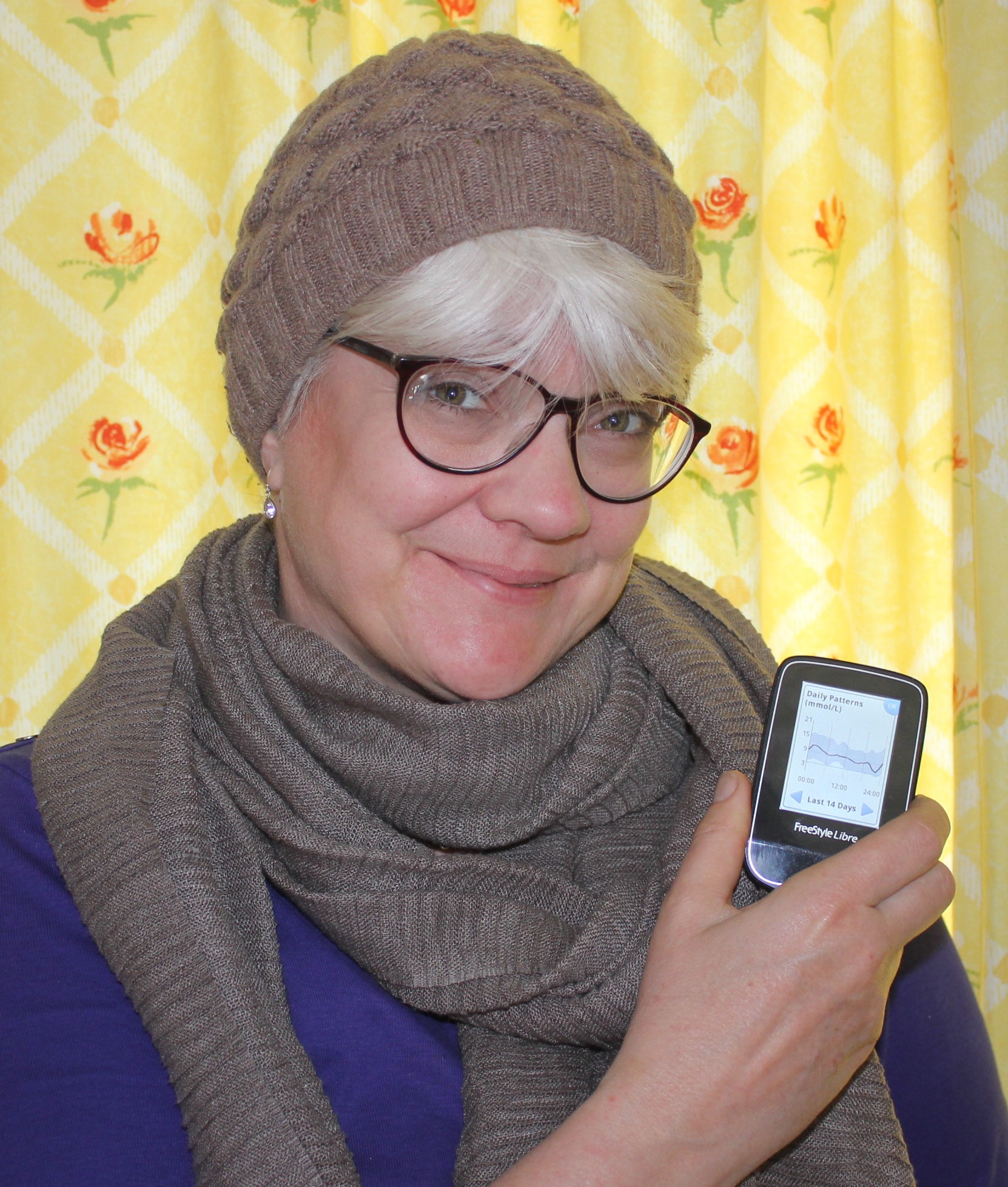
My quality of life is so much better.
I have to work an extra job now to pay for my Libre sensors but I know that in the long term it will be worth it. Diabetes is hard work. It is emotionally and physically draining at times. I have found that the key to avoiding this drain is information, the kind of information that the Libre has given me. It has proved the single best new tool in my kit since diagnosis 42 years ago.
The Libre4All Diabetes Campaign
Thank you, Jude for sharing your diabetes story with Thriveabetes. Hopefully, soon, we will see that Jude is included HSE's Reimbursement Scheme for the Freestyle Libre and doesn't have to struggle financially to afford it.
If you are interested in supporting the campaign to ask the HSE to based eligibility on the Freestyle Reimbursement scheme on clinical need and to remove the age limit, please sign this petition and join us when we hand this petition over to representatives of our government on Wednesday 18th April 2018 outside Leinster House, Kildare Street, Dublin 2 at 11:30am. Read more about this here.
 Gavin lives was diagnosed with type 1 diabetes at age 8 in 2000 and hopes that by doing this he will inspire others living with type 1 diabetes that they too can achieve their dreams but also to raise awareness in the wider public about the challenges living with type 1 diabetes.