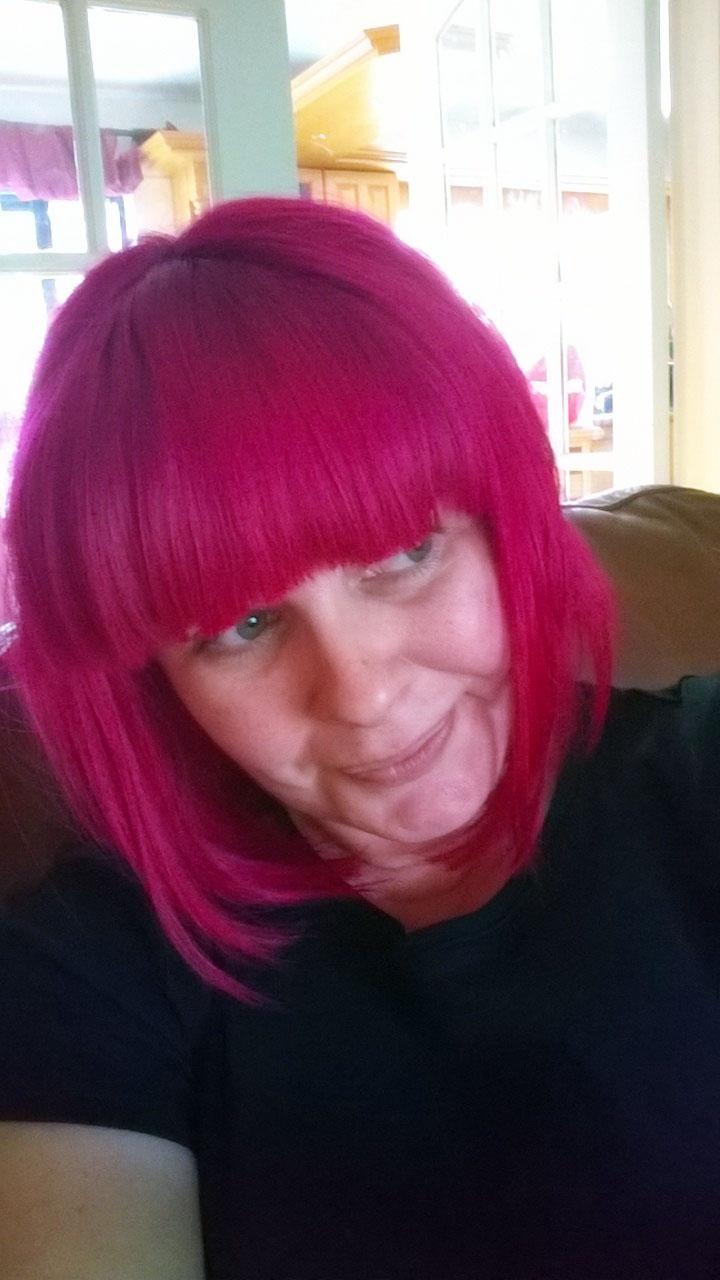
 Tracy Fahey and I met briefly in Limerick in the days when there was a young and fun diabetes support group up and running there.
Tracy is the head of the Dept of Fine Art & Postgrad Studies at Limerick School of Art & Design and the longest serving judge on the Junk Kouture Competition panel.
Tracy Fahey and I met briefly in Limerick in the days when there was a young and fun diabetes support group up and running there.
Tracy is the head of the Dept of Fine Art & Postgrad Studies at Limerick School of Art & Design and the longest serving judge on the Junk Kouture Competition panel.
We really didn't get a chance to get to know each other but she emailed me a couple of weeks ago about a project that she is working on in the area of expressive art workshops for adults with chronic illnesses. Unfortunately, it looks like we are unable to include the workshops in this year's Thriveabetes but I am keeping an open mind. Because you never know what will happen in the future!
I interviewed Tracy via email and here is that interview.
GF; Tracy, how long have you lived with type 1 diabetes?
TF: I've been a Type 1 for five and a half years now, since my thirties. Unfortunately I'm classified as a late-onset T1 (LADA or Type 1.5), and as many others in my situation I was initially misdiagnosed as potentially pre-Type 2, though I was addressing this with sensible diet and exercise, but instead my pancreas failed and I ended up with a severe case of diabetic ketoacidosis, which resulted in a coma and a stay in ICU. Not the ideal scenario for receiving a diagnosis! A diagnosis of a chronic illness is always a shock, especially if you've been lucky enough to have been robustly healthy beforehand. Losing your able-bodied privilege is hard, having to plan and manage and calculate endlessly is hard, but the hardest part of all initially is feeling a loss of identity and a sense of mourning for your lost, spontaneous self.
Having said that, the year or so post-diagnosis was the toughest part. After the shock, rage, grief and bargaining comes acceptance, and the possibility of thriving. What being a person with Type 1 has taught me more than anything, is that time is precious and life is to be lived to the full. There's nothing like a brush with mortality to waken you up. In the last five years I've travelled as far as New Zealand, started and finished a PhD, written a book, set up a research centre, started a fiction writing career and published fourteen stories, and found a whole new research interest stemming from my current identity as a person with diabetes - that of medical humanities. On bad days (like we all get) I will still get resentful and angry at the unending nature of diabetic management, but at those times I try to balance that with remembering the new, clearer perspective on life it has brought me. It's all part of the blood sugar trampoline effect that Grainne blogs about!
GF: Tell us a little about yourself, such as where are you from and what is your job?
TF: I'm originally from Louth and have move incrementally south since, working as Head of Design in Griffith College Dublin, then Head of Humanities in IT Carlow, then moving to Limerick in my thirties to work as Head of Art and Design in LSAD. I now work as Head of Fine Art and Head of Centre for Postgraduate Studies there. I also run our research centre and part of that work involves researching in the area of fine art and chronic illness.
GF: Tell us about the expressive art workshops for adults with chronic illnesses that you are researching at the moment.
TF: Since I could accept and understand my diagnosis, I've been interested in researching the intersection between the arts and medicine. I'm particularly drawn to the area of medical humanities; a way in which art, literature and creative practice can help translate the medical discourse of healthcare, involve the patient and help them tell their story in a way that improves their input into their own care. I'm also interested in the idea of 'otherness', shame and disguise that affects people with chronic illness, and the Gothic version of our abnormal body that the medical profession shows us. I've published an article on this subject in the Gothic Studies journal (‘Blood Sugar: Gothic Bodies and Diabetes’ ) and presented papers on patient narratives in conferences in Trinity College Dublin and Manchester Metropolitan University. My current project is to bring this methodology to persons with type 1 diabetes, especially those who are newly diagnosed, in order to focus on the idea of identity reconstruction post-diagnoses. My whole motivation, unsurprisingly, stems from my own painful experience of diagnosis and the extremely limited supports offered to me post-diagnosis, and the consequent desire to help others through this experience. My aim is to work with healthcare providers or patient support groups to do this, and would be delighted to work with any willing small groups of type 1 adult patients. I'm currently researching and testing approaches to this, including body-mapping, creative writing and simple but expressive art techniques.
Part of my research has involved studying on a great online programme run by the University of Capetown - Medicine and the Arts. Lately I've been extending my medical humanities research into even more taboo areas; I'm also interested in creative practice and end of life experiences. I'm lucky enough to be enrolled on a programme on this, the wonderfully named Kicking the Bucket course, run by two Limerick artists with chronic illnesses, Sinead Dinneen and Katie Verling. Last year, I worked with Sinead and another colleague from social care, Jennifer Moran Stritch, to get Arts funding to run a Death Cafe, a non-medical space where people come together to eat, drink and discuss their thoughts on end of life. Based on this experience, on April 21st I'm running a symposium in LSAD on 'Death/Disease/Design' which is bringing together interdisciplinary researchers to start conversations about how the arts can work cooperatively with models of healthcare right throughout our lifespan.
In the oddest way, being a person with type 1 diabetes has led me on some very interesting directions - researching areas I never expected to, making marvellous connections with a whole range of collaborators, and learning more more about myself in the process. I'd still be the first to put my hand up for an artificial pancreas, but I accept that my T1 status has opened my eyes, taught me some hard lessons in compassion but also some very interesting lessons in medical humanities.
Thank you Tracy for agreeing to be interviewed.
If you have a diabetes story to tell and would like to share it with the Thriveabetes community, email Grainne@thriveabetes.ie
 Shane lives in Dublin and has represented Ireland at two World Diabetes Congress (WDC) as part of the